MORE THAN HUMANS - THE FUTURE IS MULTISPECIES

Exhibitions

Date: 10 June 2025    |    Location: Campus Bovisa. Via Candiani 72 20158 MILANO, Italy

What is the role of design in a multispecies future? Living buildings, chemical democracies and multispecies governance: three speculative installations that question human centrality.

Panel with:

  • Elisa Giaccardi (Politecnico di Milano)
  • Alessandro Masserdotti (dotdotdot)
  • Martín Tironi (PUC, Chile)
Event Image

More Than Humans – The Future is Multispecies

This exhibition showcases three of the most significant projects developed by 55 students from the MSc in Digital and Interaction Design at Politecnico di Milano. The work emerges from a course led by the multispecies collective Design Intelligences, guided by professors Elisa Giaccardi and Francesco Vergani in collaboration with Alessandro Masserdotti (Dotdotdot).

Each installation imagines a future where AI is not merely a tool, but an active participant in the co-evolution of ecosystems — collaborating with plants, microbes, animals, and materials to regenerate, adapt, and transform.

Exploring the emerging field of more-than-human design, the exhibition envisions AI as frugal, context-aware, and ecologically embedded — a mediator between species that supports ecological intelligence rather than replacing it. Through immersive and speculative experiences, the works ask a dual question: what can AI do — and what should it become?

From living buildings to ecological AIs and chemical democracies, More Than Humans invites us to rethink design as a practice of listening, coexistence, and shared transformation.
Outcome Image

CoHub: More-than-human city making

CoHub: More-than-human city making

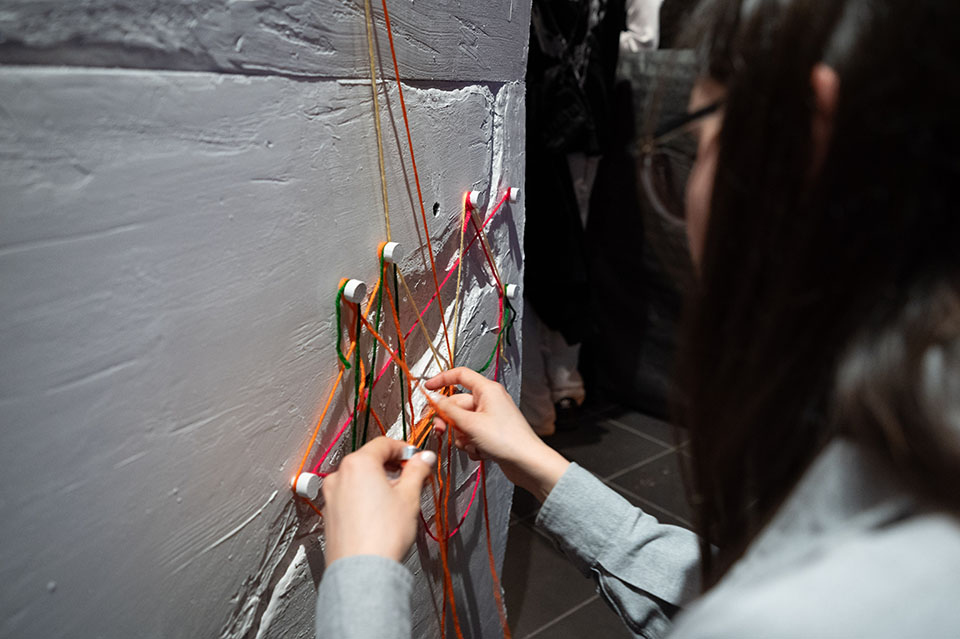
In a future marked by extreme urban heat, this project reimagines abandoned buildings as living ecosystems. Moss cools the concrete, fungi detoxify the soil, and trees weave shade canopies — all coordinated by an AI system mediating ecological flows.

Rather than seeking control, the project encourages co-creation with microbial, plant, and animal life. Visitors are invited to intervene on the structure, then step back and observe the slow regenerative process through a crack in the wall.

CoHub is not just architecture — it’s a step toward urban futures where nature reclaims its space.

Nexus: Chemical democracy

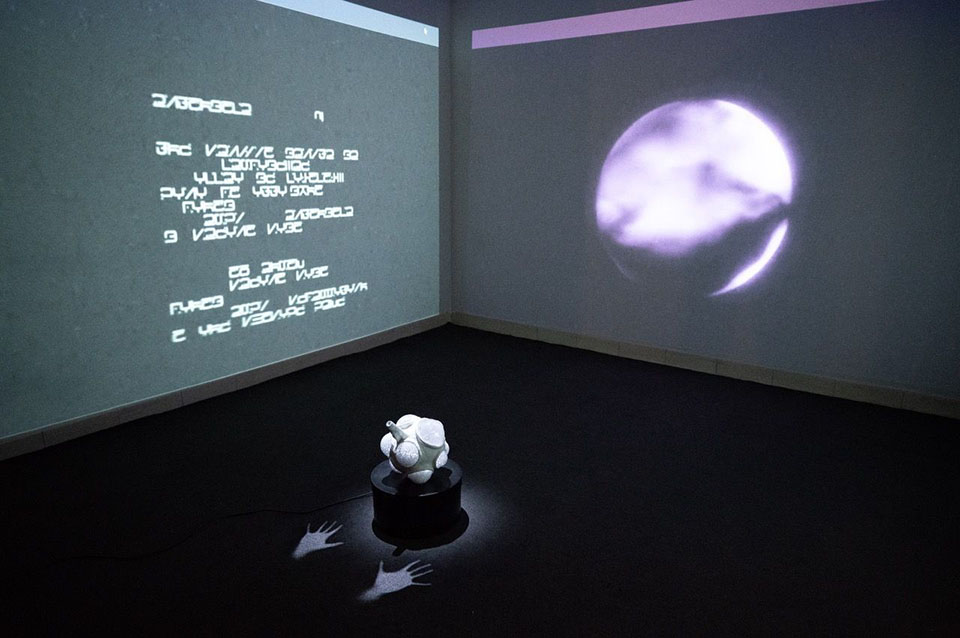
Nexus imagines a future where artificial intelligence deciphers microbial stress signals to guide mammals through rituals of ecological exchange. In moss-covered sanctuaries, humans offer bodily resources — moisture, salts, nutrients — to support ecosystems strained by extreme heat.

Fungal networks redistribute these gifts underground, sustaining life where it’s needed most. Visitors kneel before a chemical collector to contribute, becoming living vessels of Earth’s chemistry.

Each donation updates an evolving “code of chemical democracy,” orchestrated by AI to foster new forms of invisible, multispecies cohabitation. What begins as crisis becomes symbiosis.

Context Image

Nexus: Chemical democracy

Outcome Image

Ripples: Multispecies governance

Ripples: Multispecies governance

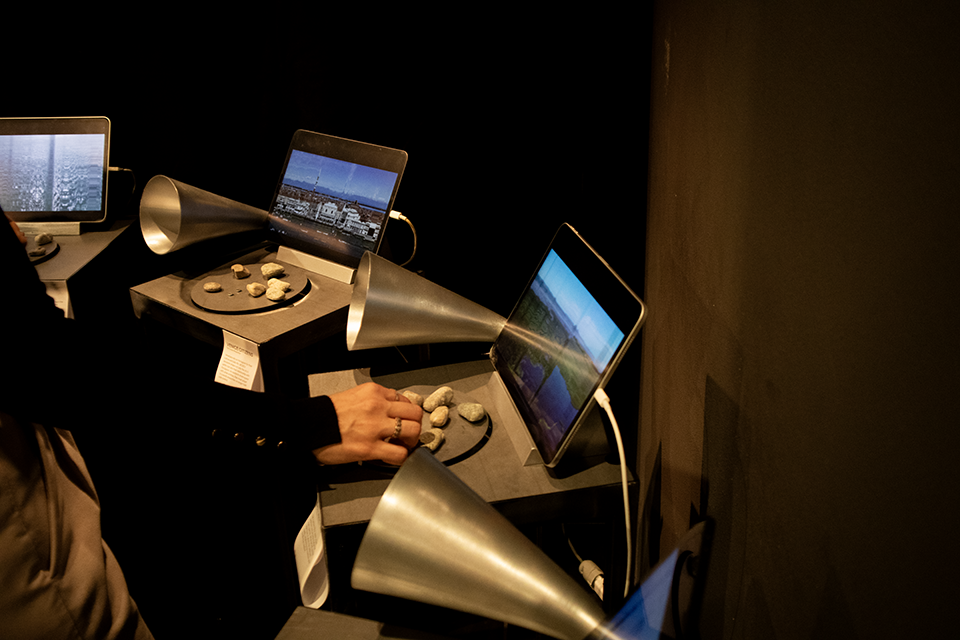
The MOSE barriers, designed to protect Venice from flooding, have disrupted the lagoon’s ecological balance — raising urgent questions about human-centered infrastructure and resource distribution. Ripples responds by giving voice to marginalized non-human entities, turning environmental imbalance into a participatory and embodied experience.

Rather than portraying balance as harmony, the installation exposes it as a fragile negotiation of power and privilege across species. Visitors are invited to reconsider their role — not as saviors or managers, but as participants in a more attentive, regenerative coexistence.

In this future, the lagoon thrives not because we control it, but because we learn to listen. Survival is no longer a human-only concern.